



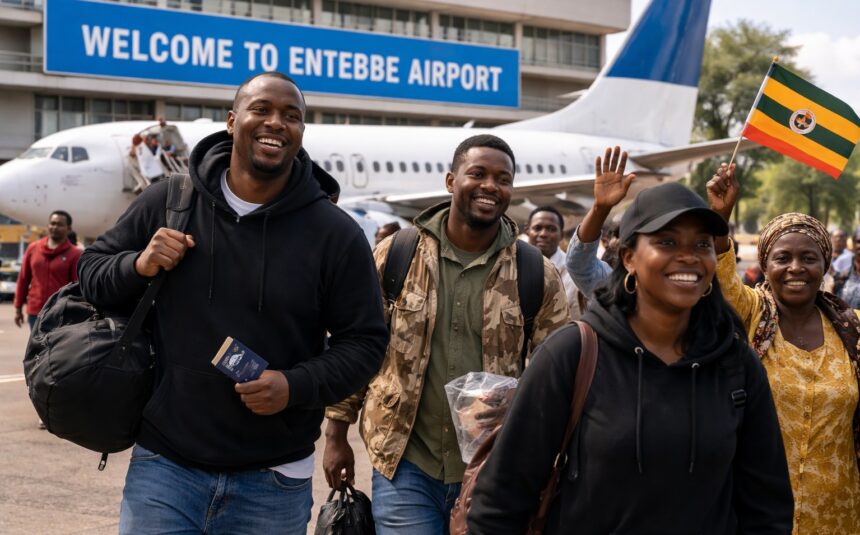
Uganda has begun receiving individuals deported from the United States under a newly established third‑country deportation agreement, marking a significant shift in the East African nation’s role in global migration governance.
On April 2, 2026, a group of deportees from the United States — reported as eight to twelve individuals — arrived at Entebbe International Airport after being flown in under the arrangement, authorities and civil society groups confirmed.
Terms of the Agreement
The arrangement — first signed in August 2025 — allows Uganda to accept third‑country nationals who;do not qualify for asylum in the United States,are unwilling or unable to return to their countries of origin,are of African origin (preferred under the deal), and do not have criminal records or are not unaccompanied minors.
According to the Ministry of Foreign Affairs, the agreement “conforms to Uganda’s national laws and international obligations” and is intended to help individuals who might otherwise be left stateless or without a clear deportation destination.
Legal Challenges
Despite official framing, the Uganda Law Society (ULS) has strongly criticised the process, calling the arrivals “undignified, harrowing and dehumanising.” The body has filed a lawsuit against the government, arguing that there was insufficient legal basis, consultation, and transparency in accepting deportees from the U.S. without clear domestic immigration procedures.
“The process that has seen these individuals arrive without prior consultation with mandated institutions such as parliament or immigration authorities is deeply troubling,” said ULS leadership, adding that they are seeking judicial intervention.
Humanitarian and Policy Implications
Critics — both domestic and international — warn that receiving deportees under such arrangements could strain Uganda’s already substantial role as Africa’s largest refugee host, with nearly 2 million refugees and asylum seekers from neighbouring countries.
Human rights groups have also raised concerns about the welfare and legal status of individuals sent to Uganda, especially when they have no historical, cultural or familial ties to the country.
Reports indicate that the deportees’ identities and nationalities have not been publicly disclosed, compounding fears about their vulnerability post‑arrival.
Regional Context
Uganda is not alone in striking such agreements with the U.S. Other African countries, including Rwanda, Eswatini and Ghana, have also entered deals to accept deported migrants under similar terms as part of broader U.S. efforts to accelerate deportations of undocumented migrants, asylum seekers and others who cannot be repatriated to their home countries.
Outlook
As the legal challenge unfolds in Uganda’s courts, the government faces growing pressure to clarify how it will integrate and protect these deportees within its borders while balancing diplomatic relations with Washington as the case could set important precedents for migration policy and international human rights obligations in Africa.