



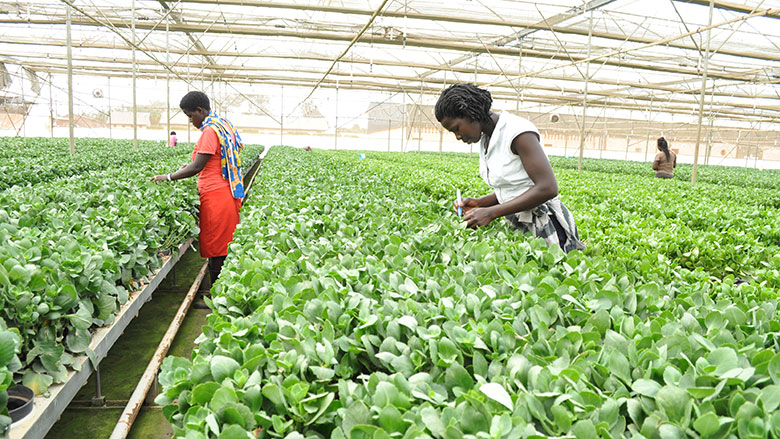
The African Development Bank Group has awarded a $16.6 million grant to the International Institute of Tropical Agriculture to roll out the third phase of the Technologies for African Agricultural Transformation programme (TAAT-III), aimed at scaling climate-resilient farming solutions across the continent.
The agreement, signed on February 18, 2026, in Abuja, signals renewed efforts to modernise African agriculture by expanding access to proven technologies, strengthening seed systems and deepening partnerships among research institutions, governments and private sector players.
Launched in 2018, TAAT has reached nearly 25 million farmers and expanded climate-smart agricultural practices across more than 35 million hectares. Working with CGIAR centres and national partners, the programme has increased crop yields by up to 69 percent and generated over $4 billion in additional agricultural value.
Countries including Sudan, Ethiopia, Zambia, Zimbabwe and Nigeria have recorded significant productivity gains in staple crops while improving resilience to climate shocks.
Nigeria, a key beneficiary, saw wheat farmers more than double yields from 1.7 tonnes per hectare to 3.5 tonnes under the programme’s Wheat Compact, driven by the adoption of improved heat-tolerant seed varieties. Seed system assessments supported by TAAT also informed reforms to expand access to certified climate-resilient seeds.
Abdul Kamara, Director General of the Bank’s Nigeria Country Department, said TAAT-III will accelerate the delivery of innovation. He noted that the new phase aligns with the Bank’s strategic priorities and will focus on scaling technologies faster and more sustainably.
Financed through the African Development Fund, TAAT-III will adopt a stronger private sector-driven model, expand digital tools such as technology e-catalogues and real-time monitoring platforms, and embed innovations within national agricultural investment plans.
Simeon Ehui, Director General of IITA, said the programme would deepen science-based solutions that improve farmers’ incomes and strengthen Africa’s food systems.
The third phase is expected to reach an additional 14 million farmers across 37 low-income and vulnerable countries.
Sources.