



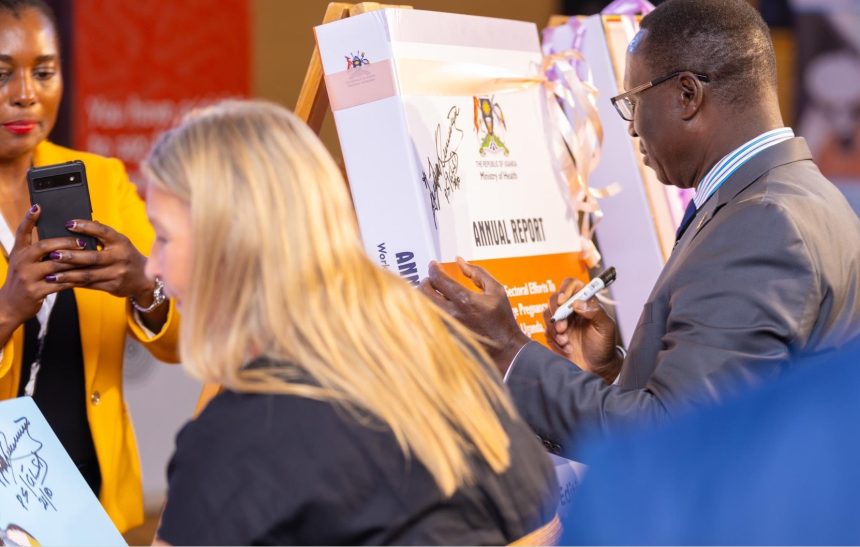
Uganda has launched an ambitious five-year National Adolescent Health Costed Implementation Plan (CIP) 2025/26–2029/30, aimed at strengthening adolescent empowerment, participation, and well-being.
The plan, unveiled at a national event in Kampala, was graced by senior government officials, development partners, and youth representatives who pledged collective action to improve outcomes for young people across the country.
Speaking as Chief Guest, Mr. Aggrey Kibenge, the Permanent Secretary in the Ministry of Gender, Labour and Social Development, reaffirmed government’s commitment to building systems that prioritize the unique needs of adolescents and young people.
He noted that the Ministry is implementing the United Nations Joint Adolescent and Youth Program, in partnership with 13 UN agencies, to enhance livelihoods, participation, and empowerment.
“We are working to ensure that policies and programs across all sectors integrate adolescent needs,” Kibenge said.
“Through collaboration with local governments and community structures, we are supporting child protection, life skills, and workforce development programs that enhance resilience and agency among young people.”
Mr. Kibenge acknowledged progress made but highlighted persistent gaps in coordination, accountability, and financing.
“We still face challenges such as inadequate data on adolescent health outcomes, especially among boys and out-of-school youth, and limited funding for adolescent development,” he said, calling for stronger multisectoral partnerships and evidence-based planning.
Dr. Irene Mwenyango, representing the Ministry of Health, described the new plan as a critical framework to guide national efforts in adolescent health and sexual reproductive rights.
“The CIP aligns with the National Development Plan IV and other national strategies such as the framework on health for education and the strategy to end teenage pregnancy and child marriage,” she said.
“It provides a coordinated approach to address issues of sexuality, mental health, substance abuse, malnutrition, and the rising HIV infections among adolescents.”
Kristine Blokhus, the UNFPA Country Representative, commended Uganda for adopting an inclusive and multisectoral approach, stressing that the country’s youthful population represents both “a challenge and an opportunity.” She noted that 12% of Uganda’s population is aged 15–19, and 23% between 18–30, making youth engagement critical for national progress.
“We want to see every young person in Uganda not just survive, but thrive,” she said. “Adolescents’ well-being is not only a health issue — it’s a developmental and economic priority.”
Blokhus also called for increased investment in youth-led initiatives and stronger accountability at both national and district levels. “Investment in adolescent health, education, and inclusion is the smartest investment Uganda can make to harness the demographic dividend,” she emphasized.
Delivering the keynote address, Dr. Hamis Mugendawala from the National Planning Authority underscored the importance of human capital development and integrated planning. “Uganda has now adopted program-based planning led by the Ministries of Education, Health, and Gender,” he said.
“This reflects the critical need for institutions to work together to nurture the young person we all want to see.” He added that the government’s shift towards lifecycle planning and pooled resourcing demonstrates a stronger commitment to addressing adolescent needs from conception through adulthood.
Mr. Henry Semakula, a Senior Education Officer at the Ministry of Education and Sports, reiterated that education remains the most effective deterrent to early motherhood. He highlighted ongoing efforts to enforce the re-entry policy for young mothers, ensuring that teenage girls who become pregnant are supported to return to school.
“Education is a powerful equalizer,” he said. “We must ensure that every girl who drops out has the opportunity to continue learning and rebuild her future.”
The plan, developed through extensive consultations with line ministries, cultural and religious institutions, civil society, and young people, will guide Uganda’s efforts in adolescent health over the next five years.