



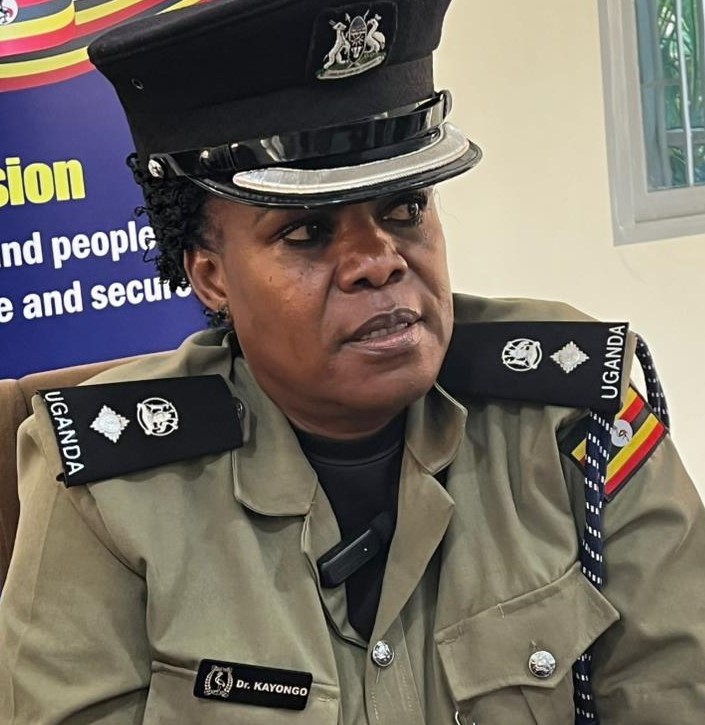
The Uganda Police Force has called on citizens to take a more active role in preventing crime, emphasizing that community participation is critical to improving safety and security across the country.
Speaking during a public engagement with the media, Dr. Aisha Kayongo, who works under the Directorate of Chief Political Commissariat in charge of press and public information, said crime prevention cannot be left to police alone and requires stronger collaboration with communities.
Kayongo said the force’s latest annual crime report recorded a 4.1 percent reduction in crime, which she attributed partly to increased community policing initiatives implemented by government and security agencies.
“Our core theme is about the role of citizens in combating crime,” Kayongo said. “Many times the public believes they must wait for security agencies to intervene, yet the Constitution gives citizens the mandate to work in partnership with police.”
She explained that community policing involves building cooperation between security agencies, local leaders, and residents to detect and prevent crime before it escalates. According to Kayongo, stronger collaboration with local councils, religious leaders, parents, and other stakeholders could significantly strengthen crime prevention efforts.
The police official also highlighted the role of the media and digital platforms in enhancing public safety, saying responsible use of social media could help disseminate alerts and information about crime in communities.
“Social media platforms can be used positively to support community policing by sharing information responsibly and engaging security and local leaders on emerging crime trends,” she said.
Kayongo noted that the police face a significant manpower gap, with current staffing levels far below internationally recommended standards. Ideally, one police officer should serve about 500 people, but Uganda’s force—estimated at around 50,000 officers—is tasked with policing a population of about 45 million.
“This means police cannot be everywhere at all times,” she said. “That is why we are encouraging communities to take responsibility for their safety and work closely with security agencies.”
She identified robbery, rape, murder, attempted suicide, and domestic violence as some of the major crimes reported in recent statistics, with domestic and gender-based violence emerging as a major concern.
Kayongo said regions such as Rwizi recorded relatively higher crime cases, highlighting the need for targeted interventions including neighbourhood watch programmes and stronger reporting mechanisms.
She also urged citizens to use existing emergency reporting lines such as 999 and 112 to alert authorities when crimes occur.
“Crime often happens in communities where people see what is happening but remain silent,” Kayongo said. “We want citizens to report incidents early so that police can respond quickly and prevent further harm.”
The police official added that the force is working with civil society organisations, media houses and community leaders to strengthen public engagement and reduce crime through prevention-oriented strategies.